by Julie Pantalen
Please follow us on X and Telegram
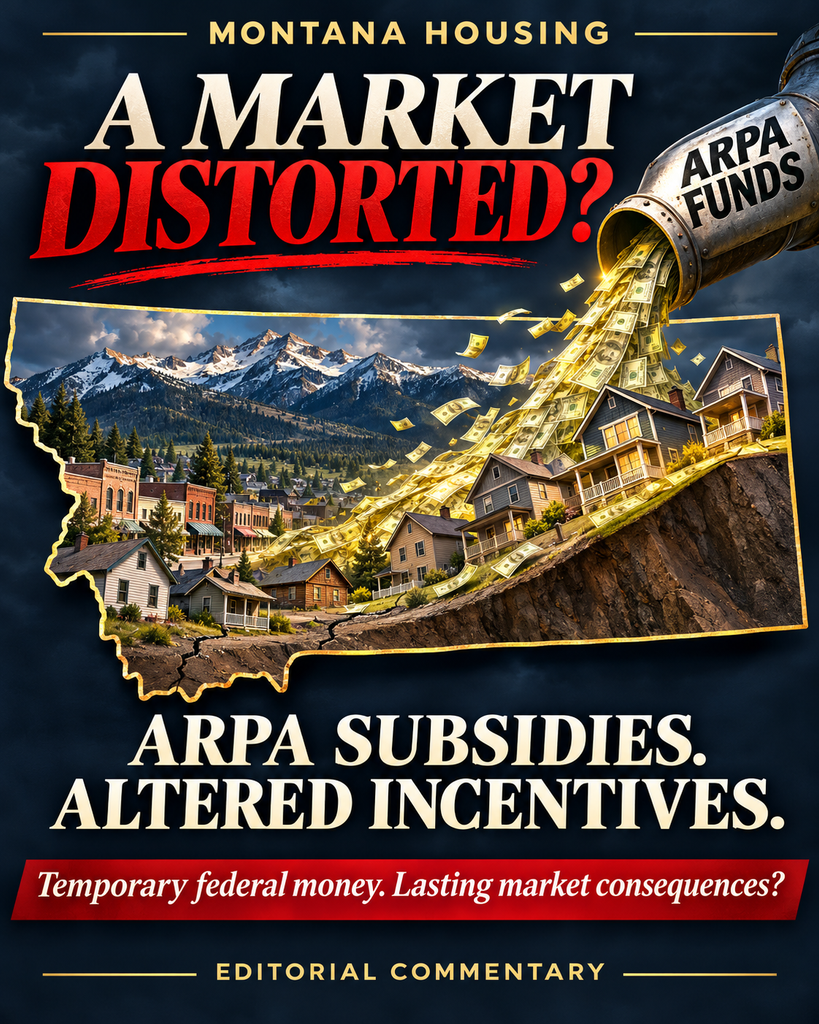
On April 30, 2021, Montana Governor Greg Gianforte (R) signed into law HB 632 to implement the receipt and appropriation of federal stimulus and COVID recovery funds. This was known as the American Rescue Plan Act (ARPA).
A portion of the legislation dealt with housing issues presumably affecting Montanans due to the effects of the pandemic. The Montana Department of Commerce administered the housing funds for renters, which included rent, utility, and internet assistance. The Department further offered assistance for homeowners to help with mortgage delinquencies, utilities, property taxes, and home repairs.
On the last of all readings after amendments and conference committee reports, the following Republican Representatives and Senators voted NO on HB 632:
House
Becky Beard (R)
Caleb Hinkle (R)
Jedediah Hinkle (R)
Terry Moore (R)
Senate
John Esp (R)
Carl Glimm (R)
Steve Hinebauch (R)
Theresa Manzella (R)
Tom McGillvray (R)
Cary Smith (R)
In a 2021 Legislature that boasted 67 Republicans in the House, 31 Republicans in the Senate, and a Republican Governor it is, in retrospect, astonishing that HB 632 became law.
The rental assistance program paid up to $2,200/month for rent. HUD did not show a Fair Market Rent area in Montana in 2021 that had a rent rate that high. Dangle a $2,200/month rent subsidy in front of a landlord and see what happens to rates.
The mortgage assistance program offered up to $50,000 in funds for a homeowner delinquent on their mortgage. This total could also included future mortgage payments after delinquencies were brought current.
The ARPA program closed on September 30, 2026, after five-and-a-half years of taxpayer money being used to shore up a problem ostensibly caused by a pandemic that was over in 2023. Montana’s mortgage delinquency rate was 1.39% in 2021; today it sits at 1.86%.
In 2021, Montana’s foreclosure rate was 1 in every 12,257 homes; today it is 1 in every 8,257 homes. Money in, money out, and Montana still has a housing problem.
While in Montana in October 2026, President Donald Trump announced a $3B mortgage investment for 10,000 homebuyers through Fannie Mae and Freddie Mac. Yes, the Fannie Mae and Freddie Mac of 2008 fame.
A litany of factors play into housing distortions but, assuredly, both government interventions and government barriers are near the top of the list. Whether it’s subsidies and guarantees, or regulations, ordinances, and laws, all of these all of these play a role in the larger drama.
Do-good housing non-profits collect government handouts and lenders of every stripe qualify borrowers for government-backed loan. But not every individual is prepared or equipped to be a homeowner. Income to debt ratios might look good on paper, but how much consideration is given to whether someone is financially literate and fiscally disciplined enough to take on the responsibility of a decades-long debt? Probably not enough.
Montana’s incoming legislators must resist the temptation to intercede in Montana’s housing problem with either the state budget (taxpayer monies) or federal funds (taxpayer monies). No matter how much money is thrown at a problem, the desired outcome will continue to be elusive as demonstrated repeatedly throughout the history of government interventions.
‘NO AD’ subscription for CDM! Sign up here and support real investigative journalism and help save the republic!
Author

Staff
Share