


Please follow us on X and Telegram
Whether you’re voting on a ballot issue or a candidate for office, my advice to you is always the same: cast an informed vote or skip it and move on. Voting because it’s “good citizenship” is, in fact, bad citizenship if you don’t know who or what you’re voting for.
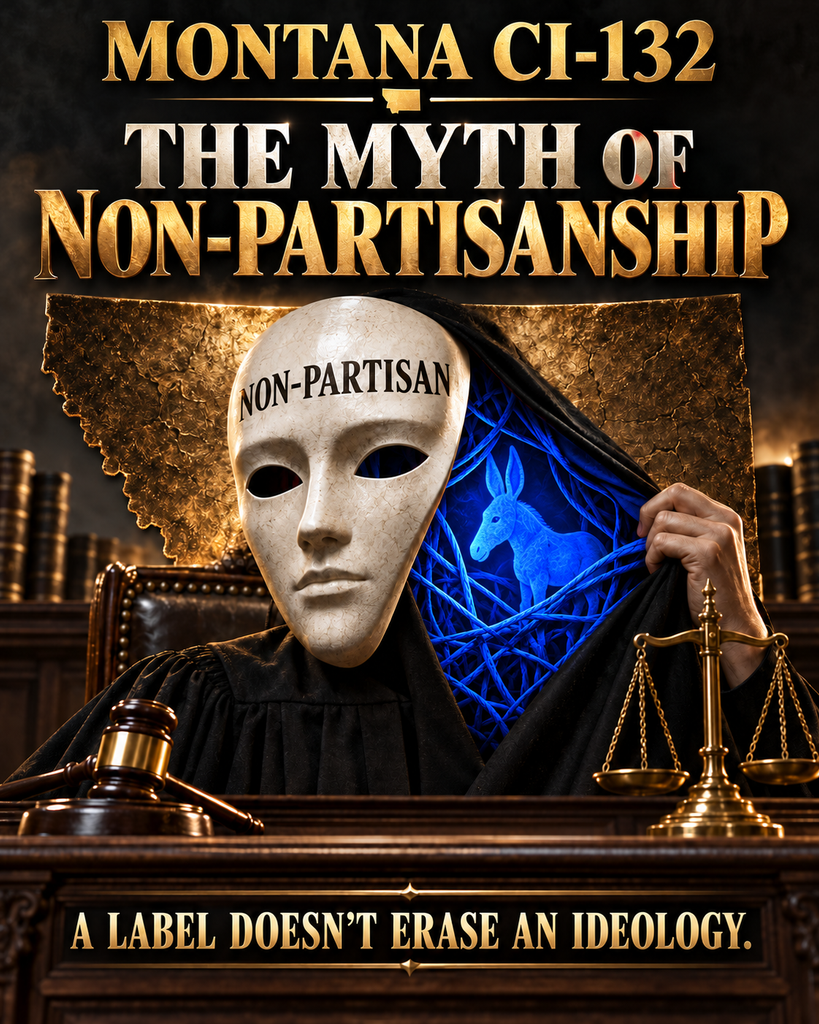
Judge and Supreme Court justice races scream out as the biggest examples of voter ignorance – and thus, bad voting. We know this instinctively. Proponents of CI-132 (the measure banning judicial candidates from ever running on a party label) keep telling us “Judges should be elected based on their record and qualifications, not politics” — both a meaningless and misleading statement. Meaningless because the very act of running for office is itself “politics.” And judicial selections have often been blatant partisan divides, as with U.S. Supreme Court confirmations, where all the Senate Democrats vote one way and the Republicans the other.
But even more to the point, their claim that banning a judicial candidate from choosing to run as a Democrat or Republican helps the voters to better know their qualifications and record as jurists is frankly absurd. That’s like telling a man with extremely poor vision, “If you close one eye, you’ll see better.” Party alignment certainly does not provide a perfect line of sight. It’s a datapoint. Imperfect, but highly useful. That’s why Montana’s leftwing legal establishment is wanting to ban party identity from judicial candidates forever. They are having a field day, electing extremely liberal people to the Supreme Court and to many district benches, by flooding these races with trial lawyer money and keeping the voters ignorant of the actual “qualifications and record.”
When it comes to voting for judges and justices, Montana voters – all of us – do indeed suffer from very poor vision. It is almost impossible for the typical voter to ascertain the judicial philosophy of candidates. Are they impartial and judicious, or are they biased and politically motivated? Are they bound to the Constitution and respecters of the rule of law, or are they inclined toward activism and government expansionism at the expense of our liberties? Are they committed to just sentences, or is their “sense of justice” situational, and dependent on their attitude toward the particular crime? How is it possible for voters to know these answers, let alone have any knowledge (beyond the false claims of vicious TV ads) of candidates’ actual cumulative record from the bench?
Disclosure: Here in Gallatin County, I have consistently voted for certain known Democrats for district court, because I knew them as excellent jurists and people of integrity. So simply looking at a candidate’s party affiliation guarantees nothing. But probably 90 percent of the time, a self-identified Republican will have a generally conservative, constitution-based philosophy on the bench (per the distinctions in the last paragraph), while a person running as a Democrat will likely (not always) be a political activist liberal.
Without this information, red state Montanans end up electing — out of ignorance and radical left funding — the very people who are most opposite to their own values. This includes a state Supreme Court that is among the most liberal in the nation. Watch the Wilson (conservative) – Eddy (far left) race if you doubt this dynamic. Eddy has already received over $800,000 through the Montana Trial Lawyers Association. How many conservative voters are even aware of this?
Oh, but these justices don’t intend to be partisan or “political” you say? Then explain why Montana lawyers can readily predict case results before the Supreme Court just by knowing the political profiles of the litigants involved. Space allows just one example among many, involving ballot initiatives, where over the past four decades, the court has struck down almost every conservative ballot issue, while upholding every liberal one. In some cases, the written decisions were so tortured as to be embarrassing. (For 90 pages of eye-popping examples, read Rob Natelson’s 2024 report on the high court HERE.)
Look. If the legislature can eventually overcome the RINOs and pass legislation simply allowing partisan affiliation in judicial races, that doesn’t stop candidates from running as independents or under some newly-conceived “Judicial Non-Partisan Party.” That’s the candidate’s choice. But if CI-132 passes, they will never have a choice. And we will all be the losers for it.
‘NO AD’ subscription for CDM! Sign up here and support real investigative journalism and help save the republic!
Author

Roger Koopman
Share


More Like This
What Is Happening at the Gallatin County Courthouse?


Amy Eddy’s Nonpartisan Mask Is Gone
